Chicago Blues: A Living History
Looking Back to 2013
Until this domain's registration expired this was the website for the Chicago Blues: A Living History which brings together two generations of Chicago’s greatest living traditionalists in an unprecedented collaboration. The legendary Billy Boy Arnold, John Primer, Billy Branch, Lurrie Bell and Carlos Johnson—all illustrious inheritors of the Chicago-blues tradition— have come together to honor the evolution of this music, from its creation to the present day. The all-star Living History Band includes: Billy Flynn, guitar, Johnny Iguana, keyboards, Matthew Skoller, harmonica, Felton Crews, bass and Kenny “Beedy Eyes” Smith, drums.
Content is from the site's 2013 archived pages as well as from other outside sources.
The new owners of this domain did not want the site's content to disappear into the basement of expired domains. The Chicago Blues: A Living History's name and information shall remain visible on the web.
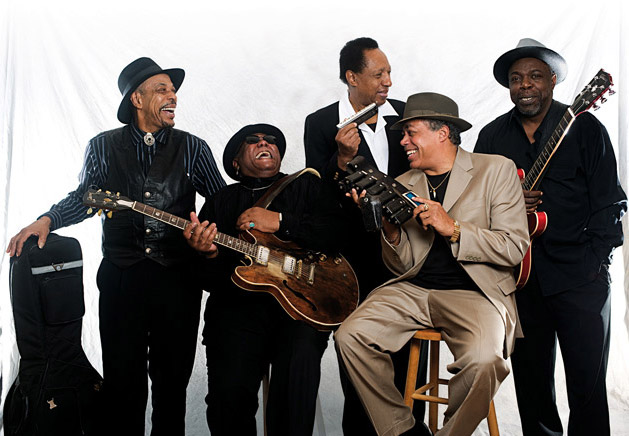
There’s a long tradition of Blues in Chicago…but life on Earth is short. That was part of the motivation behind the birth of Chicago Blues: A Living History. How, while they’re all still alive and well and living in Chicago, could we not get these guys—five of the greatest Chicago-Blues artists today—together on stage and in the studio, where they can lay down the classics with uncanny authority and deep personal connection? How, while their tales about Sonny Boy, Wolf, Muddy and Junior are still vivid in their memories, can we not get these guys together backstage and on the tour bus to let loose and get the whole group laughing with joy?
~~~~~~~~~
"First-class blues musicians. They're not just knocking off covers of some good music -- they're blasting out great old blues in the spirit in which they were created."
—Pittsburgh Post-Gazette

~~~~~~~~~
"Buy this two-disc set not because it is an essential link between past legends and present practitioners of Chicago Blues as the folks at Raisin Music would like you to believe, but because it passes a simpler litmus test : the songs will make you want to sing or dance or nod your head or howl at the moon (or maybe all of those at once)."
—Blues Review Magazine

~~~~~~~~~
History can be dry and dusty, mere examination of things past. Or it can be vibrant, full of life, a celebration of that which continues to connect us despite technology and trends. Studied carefully, this collection yields some profound insights into the growth of one of the world’s most significant musical forms. But again, the blues are about feel, not scholarship, and rarely are lessons as lively and exciting as this. Highly recommended – on every level!
—BC Music
###
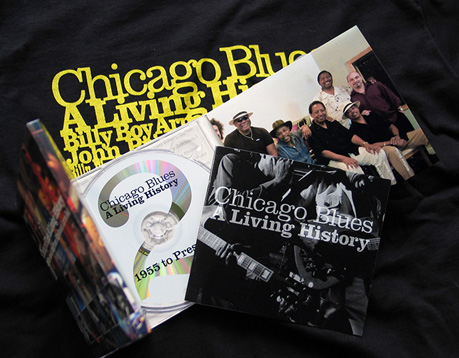
AN ASIDE: Several years ago I was breaking down my parents condo in NYC after my father has finally passed away from a lingering malaise. I came across the Chicago Blues: A Living History CD and put it on as I continued to pack a life time of art that my parents collected. When I came across the CD gatefold packaging with its 24-page Chicago blues history booklet complete with vintage B&W photos and insightful bios and essays explaining the significance behind the chosen artists and songs and how they fit into Chicago's blues history, I paused and sat down to read as the music filled the room. There was a colorful, vast photo montage of players past and present, plus a huge listing of the names of many Chicago blues artists who were not included in this tribute. Muddy, Willie, the Wolf, Little Walter, Sonny Boy and other past masters are no longer with us in fact, but in spirit the current generation of Chicago blues masters is honorably carrying on the tradition left to them. The indisputable evidence of this is on Chicago Blues: A Living History. I listened to the two-CD set featuring an all-star lineup of the city’s finest bluesmen paying deeply felt tribute to the giants of yore. It was overwhelming.
I play the cds from the Chicago Blues: A Living History frequently. It seems almost old fashion to be putting on a CD to listen to music, but I rather like it. The other day after I placed an order for womens eyeglasses online at my favorite e commerce site Eyeglasses.com where I now even order replacement lens as well as glasses frames, I decided to see if the Chicago Blues: A Living History was available on Amazon. I was surprised to see that I could actually stream it with an app. Silly me, I'm still at the CD stage. Nevertheless, the music is lovingly performed and recorded with tunes and arrangements from the golden age of Chicago Blues. I highly recommend either buying an MP3, the CD or at the least streaming it.
###
The Living History Band
Recorded Live on July, 8th 2012 at the Auditorium Stravinski, Montreux Jazz Festival (Switzerland)
BILLY FLYNN, guitar
Billy Flynn is recognized as one of the most accomplished blues guitar stylists on the world’s blues scene today. Billy has been the leader of his own group for over 30 years and has recorded nine albums under his own name. His mastery of many blues styles has made him one of the most sought-after sidemen and session players in the blues, having recording countless records with artists such as Otis Rush, Jimmy Dawkins, Snooky Pryor, Luther Allison, Mighty Joe Young, John Brim, Willie Kent, Kim Wilson, Jody Williams and many others.
MATTHEW SKOLLER, harmonica
One of the hardest working harmonica players in the Windy City, Matthew Skoller is at the forefront of a new generation who have come up schooled in Chicago’s highly competitive blues scene. Skoller has been a bandleader for over 20 years, touring constantly both nationally and internationally. He has released four albums under his own name. He has also been in demand as a session harmonica player, having recorded with John Primer, Koko Taylor, Larry Garner, Michael Coleman, Big Daddy Kinsey, Deitra Farr, Big Time Sarah, Bernard Allison and many more.
JOHNNY IGUANA, keyboards
Johnny Iguana is one of the most accomplished blues piano players in Chicago today. Raised in Philadelphia (where he led his own bands since he was a teenager) before moving to New York City, Johnny was hired by Junior Wells at age 23 and recorded and toured the world with him for three years. In addition to touring with Otis Rush, Johnny (who now lives in Chicago) has performed or recorded with Buddy Guy, Koko Taylor, Carey Bell, Lil’ Ed, Dave Myers, Byther Smith, Otis Clay, Lonnie and Ronnie Brooks, Sugar Blue and many more.
FELTON CREWS, bass
Chicago has nurtured many great musicians, and at the top of that list is bassist Felton L. Crews. Few bass players have the touring and recording experience of this Chicago native. Whether it be in jazz, blues or R&B;, Felton has recorded and toured with the world’s most respected artists. Most notably, Felton was asked by Miles Davis to join his group. Felton performed on the Man With a Horn album and toured with Miles for over two years. While working with Miles, he also recorded with Ramsey Lewis, Robert Irving, the Dells and others. He also found the time to tour with top blues and soul artists such as Otis Rush, Otis Clay, Junior Wells, Son Seals, Billy Branch, Charlie Musselwhite and many others.
KENNY “BEEDY-EYES” SMITH, drums
Kenny “Beedy-Eyes’’ Smith is widely considered the top traditional Chicago-blues drummer on the scene today. Son of legendary ex-Muddy Waters drum man Willie “Big Eyes’’ Smith, Kenny is currently the most sought-after Chicago-blues sideman and session drummer in Chicago. Some of his recording credits—over 50 albums—and touring engagements include Pinetop Perkins, Homesick James, Honeyboy Edwards, Henry Townsend, Jody Williams, Big Jack Johnson, Aaron Burton, Lurrie Bell, Dave Myers, Kim Wilson, Paul deLay, Junior Wells, the Legendary Blues Band and many others.
Carlos Johnson
Born in Chicago, Carlos Johnson is considered one of the preeminent blues guitarists in the world today. Before becoming the leader of his own band, Carlos was in demand by the biggest stars in blues with whom he toured the world for more than 20 years (Koko Taylor, Otis Rush, Junior Wells, Son Seals, Valerie Wellington, Carey Bell, Buddy Miles and many more). With his slashing and passionate left-handed guitar virtuosity, he has developed one of the most original guitar styles ever to come out of the Windy City. He combines the deep, raw blues sound of the traditional Chicago West Side style with a more contemporary, funky sound. Yet, it is with his bursts of jazz textures and phrasing and his avowed love of country-blues that he has created a style all his own. His powerful vocals, charismatic stage presence and explosive guitar make him one of the most exciting performers in blues today. Carlos is one of the keepers of the Chicago-blues flame.
Billy Branch
Billy Branch was born in Chicago in 1951 and picked up a harmonica at the age of ten. At the age of 18, he became immersed in the local blues scene—learning from such legendary harmonica players as Big Walter Horton, James Cotton, Junior Wells and Carey Bell. He eventually replaced Bell in Willie Dixon’s Chicago Blues All-Stars band and worked with Willie Dixon for six years. During this time, Billy formed the Sons of Blues (S.O.B.s) featuring musicians who were the sons of famous blues artists including Lurrie Bell, Freddie Dixon and Garland Whiteside. The S.O.B.s toured Europe and recorded for Alligator Records’ Grammy-nominated Living Chicago Blues sessions. Billy has recorded and/or performed with an incredible list of blues legends including Muddy Waters, Big Walter Horton, Son Seals, Lonnie Brooks, Koko Taylor, Johnny Winter, Albert King and Taj Mahal. He’s also dedicated to passing on the blues tradition to a new generation through his award-winning Blues in the Schools program. He is a dedicated blues educator and has taught in the Chicago school system for over 20 years as part of the Urban Gateways Project.
Billy Boy Arnold
Born September_15, 1935 in Chicago, Billy Boy is one of the prime architects of the electric Chicago-blues sound of the ’50s and a major influence on the British blues revival of the ’60s. He remains an active and vital blues artist in the 21st century, touring and recording regularly. At 13, Billy Boy was captivated by the music of the original Sonny Boy, John Lee Williamson, and visited Sonny Boy at his home in Chicago for a series of informal harmonica lessons just before Williamson’s untimely death in 1948. Billy Boy’s recording debut was the 45-rpm Hello Stranger b/w I Ain’t Got No Money, released in 1952 on Chicago’s Cool label. After teaming with street musician Ellas McDaniel (a.k.a. Bo Diddley) and moving to Chess, Billy Boy played harp on the March 1955 classic I’m a Man. Not content to be a sideman, Billy Boy signed to VeeJay and recorded the original versions of I Wish You Would and I Ain’t Got You—both later covered by Eric Clapton and The Yardbirds. I Wish You Would was also covered by David Bowie on his 1973 LP Pin Ups. The early ’60s were a difficult period for many Chicago-blues artists—music gigs began to dry up in Chicago—and Billy Boy found work driving a bus and as a parole officer for the State of Illinois. By the early ’70s, the blues revival put Billy Boy back in action, touring Europe and the U.K. Since then, he’s recorded for Alligator, Stony Plain, Electro-Fi and Raisin’ Music. Billy Boy is one of the last of the Chicago-blues originals and one of the most important and treasured exponents of American music performing today.
John Primer
As the title of his acclaimed Atlantic Records CD suggests, Grammy/Handy Award nominee John Primer is The Real Deal. At age eight, John borrowed his first guitar and started to strum. Inspiration came from a family steeped in spiritual, gospel and R&B; tradition. As a young boy, John first appeared on stage at the local Baptist church and went on to play at house parties and fish fries in and around his hometown of Camden, Mississippi. In 1963, at age 18, John moved to Chicago. He quickly found work in an era when modern electric blues and West Side and South Side sounds were first taking shape. In 1974, he joined the house band at the world famous Theresa’s Lounge on the city’s South Side. Over the next five years, John would play with such blues originators as Sammy Lawhorn, Junior Wells, Buddy Guy, Smokey Smothers, Lonnie Brooks and a host of others sculpting the sound of Chicago blues. In 1979, master songwriter/bassist Willie Dixon persuaded him to join his band the Chicago All-Stars. Traveling the U.S., Mexico and Europe, John honed his skills as a rhythm guitarist, lead slide player and powerful singer. Muddy Waters recruited John not only as his guitar player, but also as an opening act. John stayed loyal to Muddy until his death in 1983. After Muddy’s death, John signed on with the legendary Magic Slim. For the next 14 years, he toured with Magic Slim & the Teardrops. In 1995 the veteran bluesman released his solo debut The Real Deal. Since that time he’s released 10 albums and toured extensively. A master storyteller and songwriter, his catalog of songs is endless. With his strong traditionalist blues phrasing and lightning-fast slide techniques, few artists can match him.
Lurrie Bell
Born December 13, 1958, Lurrie Bell was raised in a Chicago household naturally steeped in the blues. All manner of blues greats would regularly drop by to rehearse with his father, legendary harmonica master Carey Bell: guitarists Eddie Taylor, Eddie C. Campbell, Jimmy Dawkins, and Eddy Clearwater (Bell’s cousin), harmonica legends like Big Walter Horton, and equally storied keyboardists Sunnyland Slim and Muddy Waters sideman Lovie Lee, whom Bell came to regard as his “spiritual grandfather.” So it was that at a very young age, Bell taught himself guitar and began playing along during rehearsals. At 15, he formed his first band. In 1977, Bell was a founding member of the Sons of Blues with Freddie Dixon (son of Willie) and Billy Branch. Bell also made his first appearance in the recording studio that year with his father on Carey Bell’s Delmark album Heartaches and Pains. At 20, Bell joined the band of Chicago’s acknowledged Queen of the Blues, Koko Taylor, and stayed for several years, honing his chops and learning the ropes of being a traveling musician. The Boston Phoenix declared the firebrand Chicago-blues guitar-slinger “the most talented blues guitarist of his generation”. Lurrie has contributed to over 50 albums including numerous solo efforts, duets with father Carey and an extensive list of guest appearances.
Latest Release
Chicago Blues:
A Living History
The (R)evolution Continues (2011)
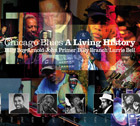
Chicago Blues:
A Living History
(2009)
Starring
Billy Boy Arnold
John Primer
Billy Branch
Lurrie Bell
The Critics Speak
"...21 tracks of gorgeous blues. Will undoubtably challenge for blues recording honors this year. A tremendous project that ought to be a finalist in a few awards categories. Chicago Blues: A Living History is just a joy to listen to (and to look at), and it is without a doubt a recording that you will return to -- even if you have all the originals... Sonically superb and carefully conceived".
—Living Blues Magazine

"...There are many blues bands who lovingly recreates Chicago blues staples, none, however comes close to this superb collection. By assembling a band thoroughly steeped in the city’s blues traditions and by featuring four leaders, Primer, Arnold, Bell, and Branch, who come with the essential DNA to be cloned as the masters, this becomes a living history which breathes new life into the blues we love. If you can only buy one blues record in 2009, make it this one."
—Art Tipaldi
~~~~~~~~~
"This excellent double-CD finds a collection of first-rate contemporary Chicago players, some with roots going back to artists active in the peak years of the ’50s and ’60s, laying down a veritable history of Windy City blues and covering everyone from Sonny Boy Williamson to Muddy Waters and Howlin’ Wolf, Little Walter, Junior Wells, Otis Rush, Magic Sam, Jimmy Reed, Buddy Guy…it’s a helluva list. Why not just put out an anthology of the original artists playing these tunes? Because this approach shows the vitality of the music today, and how new interpretations by different players steeped in the styles of their forerunners can bring out previously unheard dimensions of the Chicago blues sound..everything here is cool, at the same time it’s undeniably hot."
—Mix Magazine

~~~~~~~~~
"...Vibrant and satisfying!"
—Downbeat Magazine

~~~~~~~~~
"One day, a day was going to come when someone produced a serious tribute to the evolution of the Chicago Blues sound. That day has come.
A superb tribute that makes up for the absence, the lack of a real homage to the Chicago Blues, to its practitioners of the past and present as well as its place in the history of American music of the 20th century. A great production."
—Paris Move

~~~~~~~~~
“…The opposite of a compilation, this living history of the Chicago blues from 1940 is an ambitious undertaking that could prove to be an important reference for the genre… An astonishing success that bets on the future of this music…A meeting of the masters.”
—Jazz Magazine

~~~~~~~~~
4**** - The first two generations of electric Chicago blues are either dead or on the endangered list, but this double-disc set proves the style still has teeth and claws. Especially when John Primer revs his guitar like a turbine to pay tribute to Howlin' Wolf and Muddy Waters, and fellow six-stringer Lurrie Bell howls out Otis Rush's "My Love Will Never Die" as if he were fighting for the genre's life....These performances aren't just retro; they're real."
—Boston Phoenix

~~~~~~~~~
"The release of this double Cd is an enormous blues event. If a blues fan wants to teach a novice about the Chicago blues they should begin class with this CD."
—Blues Magazine

~~~~~~~~~
"What makes this collection special is the fact that not only is this an amazing collection of music performed by an incredible group of musicians, it also brings the music alive in a way that listening to old recordings of these performers doing their songs doesn't...
Anybody who thinks that the blues are a music of the past needs to think again and give this collection a listen. It doesn't matter when any of the material on Chicago Blues A Living History was written, because the music is certainly alive and kicking. If more collections were made along the lines of this one, I don't think you'd ever hear anyone ever wondering about the health of the blues again. Chicago has always been home to some of the most exciting blues music around, and this disc only confirms how exciting and important that music is. Even better is the fact that it reaffirms the blues don't belong in a museum, and are every bit as vital as they ever were."
—blogcritics.com

~~~~~~~~~
"History lesson or all-star blues session? Chicago Blues: A LIVING HISTORY wants it both ways - and gets it. By assembling a great multi-generational band that nearly spans the history of the genre, producer Larry Skoller insures both fidelity to the historic players and songs celebrated here and a lack of slavishness in the performances. The concise notes on each musician represented, ranging from the original Sonny Boy Williamson to Buddy Guy, serve as both pocket history and buyer’s guide for newcomers. But those steeped in the blues will find that these masterful performances speak eloquently for themselves with no need of further elaboration."
—Boston Herald

~~~~~~~~~
"...an impeccable selection of Chicago-centric blues tunes. If the front men and the outstanding support personnel team up on a live version, it'll be wise to get those tickets early".
—Chicago Sun-Times

~~~~~~~~~
"...essential for both newbies to the blues and grizzled veterans who think they've heard it all, this collection fully lives up to its title, and comes highly recommended."
—All Music Guide

~~~~~~~~~
"An engaging, updated introduction to the world of Chicago blues... Captures the musical spirit of the city and traces its development through the past 50 years. This album celebrates the past by breathing new life into it. "
—PopMatters

~~~~~~~~~
"The first of its Kind...Original. Possesses a warmth similar to the Chess label productions. These are not retro-sounding versions of the originals, they are wonderfully vibrant."
—Crossroads
~~~~~~~~~
"The ambitious and original idea of this CD needs to be applauded because it wasn't a simple task or an easy bet. But hearing the first very notes, this CD grabs you. Absolutely recommended to (re)discover the Chicago Blues of yesterday and today."
—ABS Magazine
~~~~~~~~~
"Chicago Blues: A Living History is an extraordinary offering that is an extremely timely and important recording project. It is a wonderful two-CD opus that is a brilliant tribute to authors of “Chicago Blues” lyrics and music. It rescues the perception of blues and these contemporary artists of distinction from anonymity. Billy Boy Arnold, John Primer, Billy Branch and Lurrie Bell receives a much deserved affirmation and celebration. They come across as worthy descendants of “Chicago Blues” masters before them. They are major voices of the idiom. The Living History Band is in the tradition of great “Chicago Blues” bands of Muddy Waters, Howlin Wolf, James Cotton, Junior Wells, and Magic Slim. It is one of achievement and distinction."
—Sterling Plump
Chicago Blues historian,
Emeritus Professor of African-American Studies and English
at University of Illinois Chicago
~~~~~~~~~
"Jam-packed, exquisite package of a retrospective of the Windy City’s rich blues history and tradition when placed in the hands of its deepest contemporary translators...If this album doesn’t get nominated for some kind of award or get some special recognition and if everyone out there is JJS land doesn’t buy this album, well there’s something wrong. I was completely blown away. This is a one of a kind tribute album that delivers both the emotional punch and fervor of the originals. Chicago blues is living and continues to in the hands of the greats such as these."
—Juke Joint Soul
~~~~~~~~~
"A must-have for lovers of Chicago blues - lovers of blues in general for that matter. It doesn't come any better than this."
—Boston Blues Society

~~~~~~~~~
"A veritable Chicago Blues Festival in your own home...What can I say except essential! Rating 10".
—Blues in Britain

~~~~~~~~~
"This double set tells the history of the Chicago blues through the talents of first rate real bluesmen who not only know their stuff but have walked the true paths of blues life. Each song, well chosen among historical important blues, is not interpreted – as it is too much often the case nowadays – but played with each musician's own words and styles. Lurrie Bell, John Primer and Billy Branch have long paid their dues to play the blues and singer-harpist Billy Boy Arnold is one of the true creator of the post-war Chicago blues. Undoubtedly, this is the real deal."
—Gérard Herzhaft
Author of La Grande Encyclopédie du Blues (Fayard)/
Encyclopedia of the blues (Arkansas Press)
~~~~~~~~~
"This CD presents the evolution of the Chicago blues as a living history that people continue to perform. That is part of keeping the blues alive, and this 'historic' CD set is very much alive." (San Luis Obispo Blues News)
—San Luis Obispo Blues News

~~~~~~~~~
"...Chicago Blues: A Living History blends the present and the past in a unique fashion. Folks new to the music can take a trip back in time, guided by a legendary group of musicians who are keeping the tradition alive."
—Illinois Entertainer

~~~~~~~~~
"This CD is a delightful musical voyage through the evolving Chicago sound from 40’s up to the present...The songs are good and musicians are outstanding. This is a treat musically and a must have for any blues fan, even those pups that are just starting out on the journey and the blues hasn’t got hold of them completely. Buy the CD!"
—St. Louis Blues Society
~~~~~~~~~
"There hasn’t been a Chicago blues collection this cool since Alligator did a documentary series over 20 years ago.... a fine collection that gives the classics their due and brings them forward so they won’t be forgotten or disregarded. It’s a fine way to get you into the history of the blues without feeling like you are going to school."
—Midwest Record

~~~~~~~~~
"Outstanding...A glorious Blues collection. As long as blues progenies like Lurrie Bell, Billy Boy Arnold, John Primer and Billy Branch continue to carry the blues spirit, Chicago's rich musical legacy will continue on in timeless fashion for generations to come."
—Metronome
~~~~~~~~~
"This is a must-own 2-disc set for any fan of Chicago blues. "
—Maine Blues Society
~~~~~~~~~
"First Rate. Their performances escort the genre into the future."
—Chicago Blues Guide
~~~~~~~~~
"Audacious....Fans of the traditional electric blues, especially of the Windy City variety will find a lot to like on this collection as it features some of the city's top musical talent coming together to keep the music alive and moving forward."
—Jazz and Blues Blogspot
~~~~~~~~~
"This CD is a must have...Get It!"
—About.com

~~~~~~~~~
"The overall scope of this project would have been too large for some, but not for producer Larry Skoller, whose love for this music and it performers is obvious. I'm not sure how many copies of this set were made, but if you're reading this you better get one."
—Blueswax

~~~~~~~~~
"Chicago Blues - A Living History" is just that, and it's a must have for lovers of Chicago blues, lovers of blues in general for that matter. It doesn't come any better than this."
—BluesBlast
~~~~~~~~~
"One day someone had to have the idea to produce a tribute to the Chicago Blues that it deserves, and history will show that without a doubt it was Larry Skoller who was one of them to not only think about it, but to do it and do it right."
—Zicazic

~~~~~~~~~
..."Nothing else to say except, thank you." - (5 Stars - Highest Rating)
—Soul Bag Magazine
~~~~~~~~~
"Selection"
—Blues Again! Magazine

~~~~~~~~~
"A rare and historic tribute to the Chicago Blues."
—Télé Magazine

~~~~~~~~~
"This double-CD is quite simply and without doubt a "must-have". The idea to pay tribute to the history of Chicago Blues from 1940 to the present with these artists is a total success. Indispensable!"
—Sur La Route De Memphis
~~~~~~~~~
"A magnificent double-CD. This group has no faults"
—L'Express Magazine
~~~~~~~~~
"This magnificent and unprecedented CD pays a vibrant tribute to the architects and innovators of the Chicago Blues Sound!"
—Paru
~~~~~~~~~
"Beautifully Orchestrated and flawlessly performed...a delightful tribute to the music and should be added to the collections of everyone who considers himself (or herself) a lover of Chicago Blues."
—Billtown Blues
~~~~~~~~~
"...Chicago Blues: A Living History is as close to the glory zone as we’re going to get these days, when so many of the style’s creators have gone on to higher ground. Luckily for us, that’s close enough."
—SonicBoomers
~~~~~~~~~
"...It's required listening for Blues 101, and a complete urban blues primer for blues fans new and old."
—Quad-Cities Dispatch
~~~~~~~~~
"...A perfect production. Highly recommended."
—Trad Magazine
~~~~~~~~~
"...An excellent selection."
—Folk and Acoustic Music Exchange
~~~~~~~~~
"We cannot go back to 1940 and re-create the recording of “My Little Machine” but when you pop disc one in your player and hear Billy Boy Arnold and Johnny Iguana at the piano, you’ll realize this may be the next best thing...all the songs sound amazingly fresh."
—Toronto Blues Society
~~~~~~~~~
"This is one fantastic collection that any fan of Chicago Blues will love. "
—Suncoast Blues Society
~~~~~~~~~
"Triumphant...Astonishing. Their time travel not only reveals such evolutionary trends as harp methodologies, the extended solo, and the transition of power from piano to guitar. It is genuine Living History."
—Baltimore BluesRag
~~~~~~~~~
"This isn't an anthology, but rather a loving tribute performed by a group of artists with careers and associations that stretch from the beginning of the Chicago blues era to the modern day. Chicago Blues: A Living History is a perfect introduction for those unfamiliar with the music and its history, and will be a welcome new friend for long-time fans of the style."
—About.com
~~~~~~~~~
"...A terrific idea that plays out beautifully!"
—Chico News and Review
~~~~~~~~~
"...Timely and much needed... Should be in any blues fan's collection."
—Sing Out! Magazine
~~~~~~~~~
"Chicago Blues: A Living History shows how it is supposed to be done. This is deep blues indeed...a lock for this year’s list of best blues releases."
—Jazz.com
~~~~~~~~~
"A complete Success."
—Blues Matters Magazine
Chicago Blues:
A Living History - the Inside Story...
There’s a long tradition of Blues in Chicago…but life on Earth is short. That was part of the motivation behind the birth of Chicago Blues: A Living History. How, while they’re all still alive and well and living in Chicago, could we not get these guys ....

Selections from CBLH's The (R)evolution Continues
The Production Team
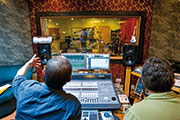
The creation of a group and major project starts with an idea, and blossoms with the artist's talent. But without the expertise of the production team, none of this could become reality...
Buy the group's CDs
Chicago Blues: A Living History (2009) Chicago Blues: A Living History - (R)evolution Continues. (2011)
~~~~~~~~
Awards & Recognition
Some of our most recent awards and nominations include:
CHICAGO BLUES: A LIVING HISTORY (vol. 1)
Living Blues Magazine Award:
Critics Poll 2010—Best Album of the Year
Grammy nomination:
Best Traditional Blues Album 2009
Blues Music Award nominations:
Best Album 2009, Best Traditional Album 2009
Blues Blast Award:
Winner, Best Traditional Album 2009
L'Académie du Jazz de France:
Winner, Best Blues Album 2009